
Many people use the terms RV and mobile home interchangeably, which leads to confusion—especially when trying to decide which type of home or vehicle fits your lifestyle. While both can provide housing and both can move from one place to another, the way they are built, used, financed, and regulated makes them very different. Understanding these distinctions helps you answer the common question: is an RV a mobile home, and which one makes sense for you?
Whether you’re looking for a permanent residence, a vacation home, or a lifestyle based on travel, knowing what separates these two housing options is essential.
What Makes an RV Different From a Mobile Home?
At the core, RVs and mobile homes serve different purposes. To understand the real differences, let’s break down their design and intended use.
- RVs (Recreational Vehicles): An RV is specifically designed for travel, recreation, and temporary living. It either drives on its own (motorhome) or must be towed (travel trailer or fifth-wheel). RVs include basic home amenities, such as beds, bathrooms, and compact kitchens, but are usually optimized for short-term stays rather than long-term residency.
- Mobile Homes (Manufactured Homes): A mobile home is built in a factory and transported to a site for long-term or permanent placement. Although they were once built on wheels, modern manufactured homes are placed on foundations and often resemble traditional site-built homes. They are intended for continuous living, not travel.
So, is an RV a mobile home? In everyday conversation, some people say yes. But legally, structurally, and practically, the answer is no—they are used and regulated for different purposes.
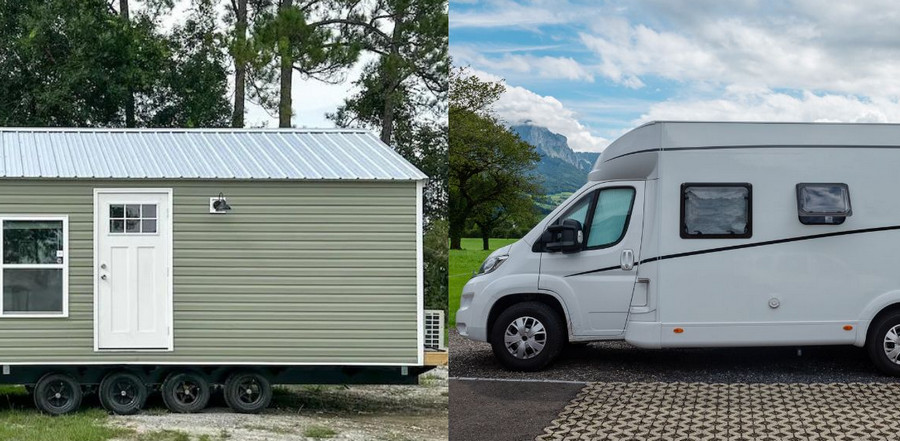
Purpose and Lifestyle: Travel vs. Permanent Living
One of the biggest differences comes down to lifestyle.
- RVs are for mobility and adventure. They are a popular choice for road trips, national park exploration, or a “snowbird” lifestyle.
- Mobile homes are for stability and affordability. They are ideal for people who want a comfortable home without the high cost of site-built housing.
If you envision waking up in new places frequently, an RV fits that lifestyle. However, if you want a steady home environment, a mobile home is designed for daily living and long-term residency.
Construction and Durability Differences
RVs are built from lightweight materials so they can travel safely on highways. This means thinner walls, compact appliances, and limited insulation.
Mobile homes, however, must meet HUD (U.S. Department of Housing and Urban Development) construction standards. This affects:
- Insulation and energy efficiency
- Structural durability
- Wind and weather resistance
- Long-term maintenance needs
While RVs are comfortable for trips, they generally aren’t designed to withstand long-term weather exposure. Mobile homes are constructed as full-time residences, often with sturdier framing and more durable siding and roofing.
Financing and Legal Classification
Another key reason the answer to is an RV a mobile home matters is financing.
- RVs are considered personal property. They are financed like cars, with chattel loans, shorter repayment terms, and generally higher interest rates.
- Mobile homes may be considered real estate. If placed on a permanent foundation and located on land you own, a manufactured home can qualify for a traditional mortgage with better terms.
Additionally:
- RVs must meet DOT (Department of Transportation) highway safety requirements.
- Mobile homes must comply with HUD building codes and local zoning rules.
Which One Is Right for You?
Ask yourself what matters most: flexibility and travel, or stability and comfort?
- Choose an RV if: You want to travel often, live minimally, and value mobility above space.
- Choose a mobile home if: You need a permanent, affordable residence with room to live comfortably year-round.
Frequently Asked Questions
1. Is an RV a mobile home?
No. An RV is a recreational vehicle designed for travel, while a mobile home is designed for long-term living.
2. Can you live in an RV full-time?
Yes, but you must consider zoning laws, campground limits, and weather conditions.
3. Can a mobile home be moved like an RV?
Technically yes, but it requires professional movers and is expensive, so most are rarely moved.
4. Do RVs depreciate faster than mobile homes?
Yes. RVs depreciate quickly because they function like vehicles. Mobile homes may hold value longer if well-maintained.
5. Can you finance an RV like a house?
No. RVs are financed with vehicle-style loans, not mortgages.
6. Can a mobile home qualify for a mortgage?
Yes, if it is permanently installed on owned land and meets HUD standards.
7. Which is more energy-efficient?
Mobile homes generally offer better insulation and higher energy efficiency than RVs.
8. Can you park an RV on land and live in it permanently?
This depends on local zoning laws. Many areas restrict full-time RV living.
9. Which has lower maintenance costs?
Mobile homes usually have lower maintenance costs over time compared to RVs used full-time.
10. Which is better for families?
A mobile home typically offers more space and comfort for daily living.
Final Thoughts
So, is an RV a mobile home? While they may seem similar at first glance, they serve completely different purposes. RVs offer freedom, travel, and flexibility. Mobile homes provide long-term housing, comfort, and affordability. When choosing between the two, consider your lifestyle, financial goals, and how you plan to use the space. With the right understanding, you’ll be able to select the option that best supports your needs and future plans.