
Living in a mobile home offers flexibility and affordable housing, but proper leveling is essential. A mobile home that isn’t level can cause structural issues, discomfort, and safety hazards. By ensuring your home is leveled correctly, you protect its foundation, maintain energy efficiency, and prevent long-term damage.
In this guide, we will explore why leveling matters, what to consider before starting, a step-by-step process for mobile home leveling, and what to check afterward. Following these tips guarantees a stable and safe home for years to come.
Why You Should Level Your Mobile Home
Leveling a mobile home is not just about comfort—it’s critical for safety and structural integrity. Uneven weight distribution can warp walls, crack flooring, and damage the overall framework.
An unleveled home may also create internal hazards. Uneven floors can cause tripping, while doors and windows may stick or fail to close properly. Furthermore, a leveled home improves airflow, enhancing energy efficiency. Proper leveling helps maintain consistent temperatures, which lowers heating and cooling costs.
Benefits of a Leveled Mobile Home
- Structural Stability: A level foundation prevents long-term damage.
- Safety: Reduces tripping hazards and ensures doors/windows function correctly.
- Energy Efficiency: Even airflow minimizes heating and cooling expenses.
- Comfort: Keeps your living space cozy throughout all seasons.
In short, leveling your mobile home is vital for protecting your property and creating a comfortable, safe environment.
Things to Consider Before Leveling Your Mobile Home
Before starting mobile home leveling, plan carefully to avoid costly mistakes.
- Check Necessity: Determine if your home truly requires leveling. Minor adjustments may suffice.
- Disconnect Utilities: Gas and water lines should be turned off to prevent accidents.
- Gather Tools: Essential equipment includes jacks, blocks, and safety gear.
- Verify Permits: Check with local authorities for any regulations or required licenses.
- Hire Professionals If Needed: Mobile homes are complex. The Mobile Home Dealer recommends professional help when structural expertise is required.
Planning ahead ensures safety and efficiency throughout the leveling process.
Essential Tools for Mobile Home Leveling
- Hydraulic jacks
- Concrete blocks
- Shims (wood or metal)
- Level
- Safety gloves and gear
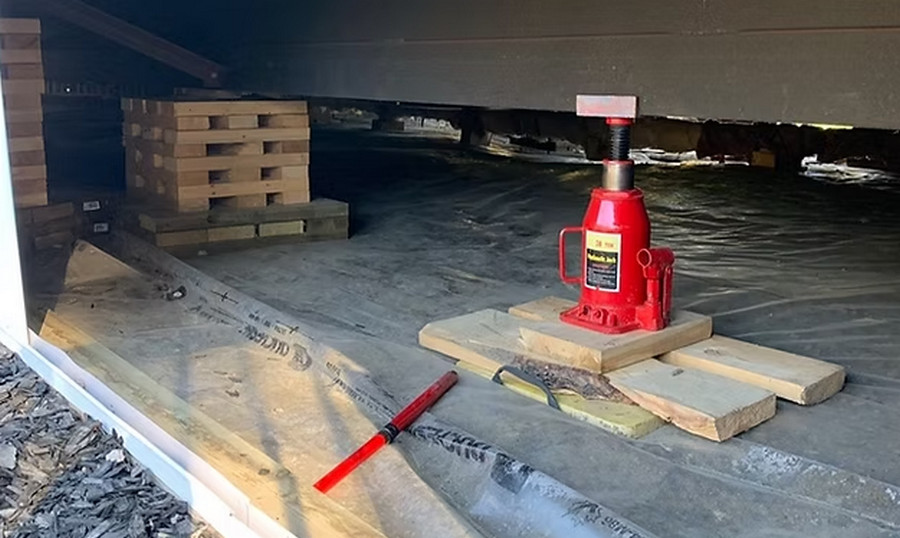
A hydraulic jack is especially crucial for safely lifting and adjusting your home.
10 Steps to Properly Level a Mobile Home
Proper leveling prevents damage and ensures stability. Follow these ten steps carefully:
- Prepare the Area: Remove debris and vegetation around your home.
- Gather Materials: Collect concrete blocks, shims, a level, hydraulic jack, and safety equipment.
- Locate Low Spots: Use a level to identify uneven areas on each side.
- Jack Up Your Home: Slowly raise the home using hydraulic jacks under the i-beams until it aligns with the highest point.
- Insert Shims: Place wood or metal shims between the base pad and block for stability.
- Add Concrete Blocks: Replace old blocks beneath each support pylon.
- Recheck the Level: Confirm alignment after each block is added.
- Repeat Steps 5–7: Ensure all pylons are secure on new supports.
- Remove Jacks & Test Stability: Verify that the home remains level and stable.
- Clean Up the Site: Remove equipment and debris to prevent accidents.
Tips for Safe Mobile Home Leveling
Always wear protective gear.
Never rush; gradual adjustments reduce structural stress.
Work with a partner for safety when using hydraulic jacks.
Things to Check After Leveling Your Mobile Home
After leveling, inspect key areas to ensure proper adjustment:
- Windows & Doors: Check for proper alignment and smooth operation.
- Plumbing Fixtures: Inspect sinks, toilets, and showers for leaks.
- Walls & Ceilings: Look for new cracks that may indicate structural issues.
- Appliances: Verify that refrigerators, stoves, and other heavy equipment are level and functional.
Thorough inspection ensures your home is safe, functional, and comfortable.
Common Issues to Watch For
Sticky doors or windows
Uneven flooring
Misaligned appliances
Persistent cracks in walls or ceilings
FAQ About Mobile Home Leveling
1. How often should a mobile home be leveled?
It is recommended to check your mobile home’s level at least once a year or after severe weather.
2. Can I level my mobile home myself?
Yes, minor adjustments can be DIY, but major leveling should involve professionals.
3. What tools are required for leveling?
Essential tools include hydraulic jacks, shims, concrete blocks, and a level.
4. Why is leveling important for appliances?
Proper leveling prevents appliances from overworking or wearing out prematurely.
5. How long does leveling a mobile home take?
Depending on size and complexity, it can take several hours to a full day.
6. What happens if a mobile home is not leveled?
Unleveled homes may experience structural damage, uneven floors, and misaligned doors/windows.
7. Are permits required for leveling?
Some areas may require permits or professional services. Always check local regulations.
8. Can weather affect the level of a mobile home?
Yes, heavy rain, soil erosion, or frost can shift the foundation over time.
9. What safety precautions should I take?
Wear protective gear, disconnect utilities, and avoid rushing the leveling process.
10. Where can I find help or resources?
The Mobile Home Dealer provides professional guides and listings for mobile homeowners.
Bottom Line on Mobile Home Leveling
Proper mobile home leveling is essential for safety, comfort, and structural integrity. Neglecting this process can lead to costly repairs, hazardous conditions, and uneven living spaces.
By planning carefully, following step-by-step procedures, and inspecting your home afterward, you can ensure stability and prolong the lifespan of your mobile home. Whether handled DIY or with professional help, maintaining a level foundation protects your investment and enhances your living experience.