
According to The Manufactured Housing Institute, as of 2020, over 22 million people live in manufactured homes throughout the United States. This accounts for nearly 10% of all new single-family home starts nationwide.
Manufactured homes have provided an affordable path to homeownership for decades. With the average single-family home costing nearly $120 per square foot, compared to manufactured homes priced at less than half, it’s no surprise families increasingly choose this housing option.
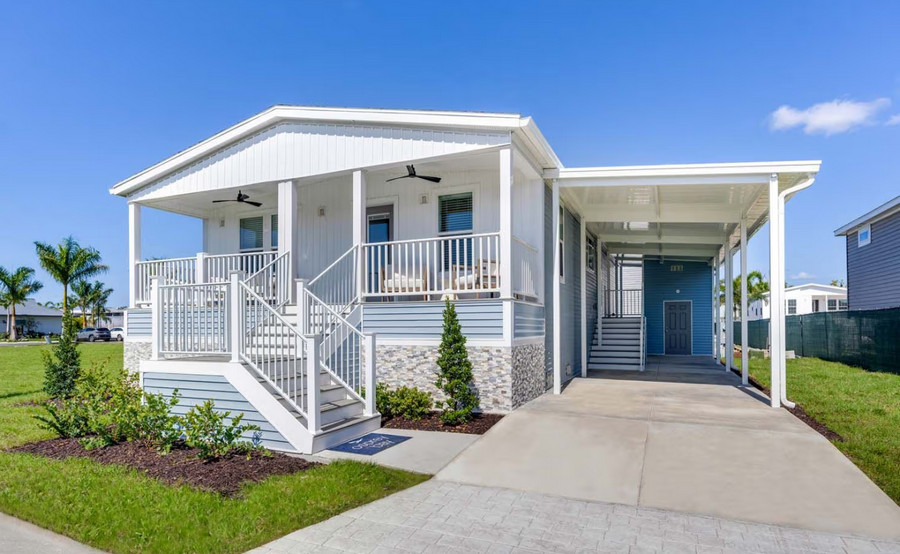
What Is a Manufactured Home?
Manufactured homes are built within a factory on an assembly line. Every home is constructed in a climate-controlled environment, ensuring precision and consistency for each model. Once complete, the homes are transported on large trucks to their designated homesite, whether in a manufactured home park or on private land.
A specialized setup crew handles the installation, securing tie-downs, steps, and connecting utilities, ensuring the home is ready for occupancy. For more on safety, see manufactured home tie-downs.
Benefits of a Manufactured Home
Speed of Build: Manufacturing indoors eliminates weather delays and uses a streamlined assembly process. Consequently, a home moves from concept to move-in much faster than a traditional single-family home.
Financing Options: Manufactured homes offer flexibility beyond standard mortgages. Buyers may:
- Buy the home and lease land in a manufactured home park
- Buy both the home and the land from the dealer
- Own land and place a home on it
- Finance the land with a mortgage, then the home with a separate loan
For additional guidance, see financing options for manufactured homes.
Affordability: Manufactured homes can be purchased new or used. Older models often provide exceptional value compared to preowned single-family homes. Learn more about investment potential here.
Why Manufactured Homes Are Like Vehicles
Manufactured homes have titles, not deeds, making them similar to vehicles. Owners must register the home with the local DMV and renew registration stickers annually. If you own a doublewide, each side requires a sticker. Interestingly, your home functions much like a car in this respect. For title guidance, see understanding mobile home titles.
Do Manufactured Homes Lose Value?
Now that we understand what a manufactured home is and its benefits, let’s examine value. Generally, manufactured homes depreciate like vehicles because they are considered personal property, not real estate. However, if placed on owned land, homeowners may gain appreciation from the land’s increasing value.
Depreciation: Homes lose value over time as personal property, much like driving a new car off the lot.
Appreciation: Homes on private land can benefit from rising land value, offsetting the home’s depreciation.
Are Manufactured Homes Good Investments?
Evaluating manufactured homes requires considering both cost and value. They provide exceptional affordability, fast construction, and high-quality features compared to traditional single-family homes. The drawback is depreciation when the home stands alone.
One strategy is buying a preowned manufactured home and placing it on owned land. This approach allows homeowners to enjoy land appreciation while minimizing the original depreciation impact. Whether new or used, in parks or on private property, manufactured homes currently offer some of the highest value in the U.S. housing market.
Ultimately, if you weigh both advantages and drawbacks, purchasing a manufactured home can be a smart investment.
This is Mark Kaiser with The Mobile Home Dealer, helping buyers and sellers make informed decisions and reach their housing goals.